Home › Commercial Gravel-to-Asphalt Conversions
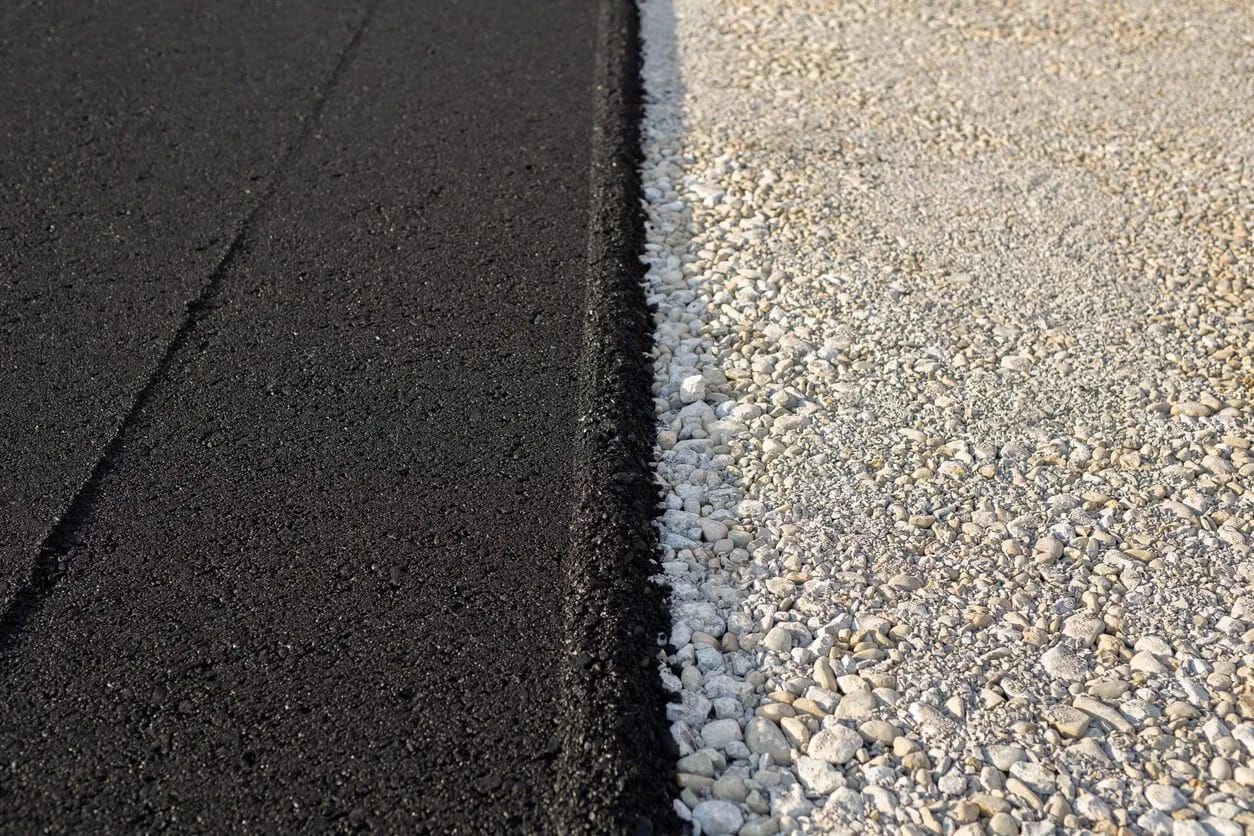
Upgrade gravel lots and drives with commercial gravel to asphalt conversions in Irving, TX. We strengthen the base, compact aggregate, and pave with hot mix asphalt for a clean, professional surface. Converting from gravel reduces dust, mud, and ongoing grading costs. Get a site review and pricing to convert your gravel area to asphalt.
Precision Asphalt Irving provides professional commercial gravel to asphalt throughout Irving, TX, Texas and the surrounding area. Our licensed, insured crew delivers safe, clean, on-time work with a free estimate before anything begins. Call (469) 242-1785 or request your free quote.
Gravel lots are costing your Irving business money
If your commercial parking or drive area is still gravel, you already know the headaches: ruts after every North Texas rain, dust blowing onto cars and storefronts, mud tracked into your building, and constant regrading bills. Precision Asphalt Irving focuses on commercial gravel to asphalt conversions so Irving, TX businesses can get a cleaner, safer, and easier to maintain lot that stands up to local traffic and weather.
Most local owners call us when upkeep on gravel starts to add up or when customers complain about conditions. Another trigger is lenders or insurance carriers pushing for a hard surface, especially for properties along Belt Line Road, MacArthur Boulevard, or near DFW Airport where traffic and expectations are higher. If you ever plan to sell or refinance, converting gravel to asphalt is often one of the simplest upgrades to increase property value and curb appeal.
Before we talk about paving, we look closely at how your site is actually used. A restaurant off Irving Boulevard with daily turnarounds and short-term parking needs a different asphalt design than an equipment yard with heavy trucks near SH 183. During our first visit we walk the lot, check drainage patterns, see where water is standing in your current gravel, and ask how delivery trucks and customers move through the site. That information drives the thickness of the asphalt, the base work needed, and how we lay out drive lanes and parking rows.
Precision Asphalt Irving will also tell you up front whether your gravel foundation is suitable or if it has to be rebuilt. Some Irving properties have decent compacted caliche or crushed concrete under the existing gravel. Others, especially older fill sites or low areas near creeks, have soft spots that must be corrected before asphalt goes down. Doing that detective work early prevents early cracking and potholes later.
How commercial gravel to asphalt conversions are actually done
A proper commercial gravel to asphalt conversion in Irving is not just paving over what is there. The process involves several specific steps that we follow on every project.
1. Site evaluation and elevations: We start by shooting elevations with a laser level to understand slopes, drainage paths, and existing high and low spots. Irving gets intense downpours, so we look for ways to move water toward existing inlets, street gutters, or swales. If your gravel currently holds water near the entrance or building, we plan how to correct that in the grading plan.
2. Stripping and proof-rolling: If the existing gravel is thick enough and fairly clean, we will blade it with a motor grader to remove ruts and windrows, then compact it with a vibratory roller. We perform a proof-roll, which means running a loaded truck or roller across the area to expose soft spots. If areas pump or deflect, we mark and excavate those sections.
3. Subgrade repair and base installation: Soft or organic material is removed and replaced with compacted select fill or crushed concrete. For most Irving commercial lots, we install a base course of crushed limestone, generally 4 to 8 inches thick depending on expected traffic. That base is graded to our design slope and compacted to at least 95 percent density so the asphalt has a solid platform.
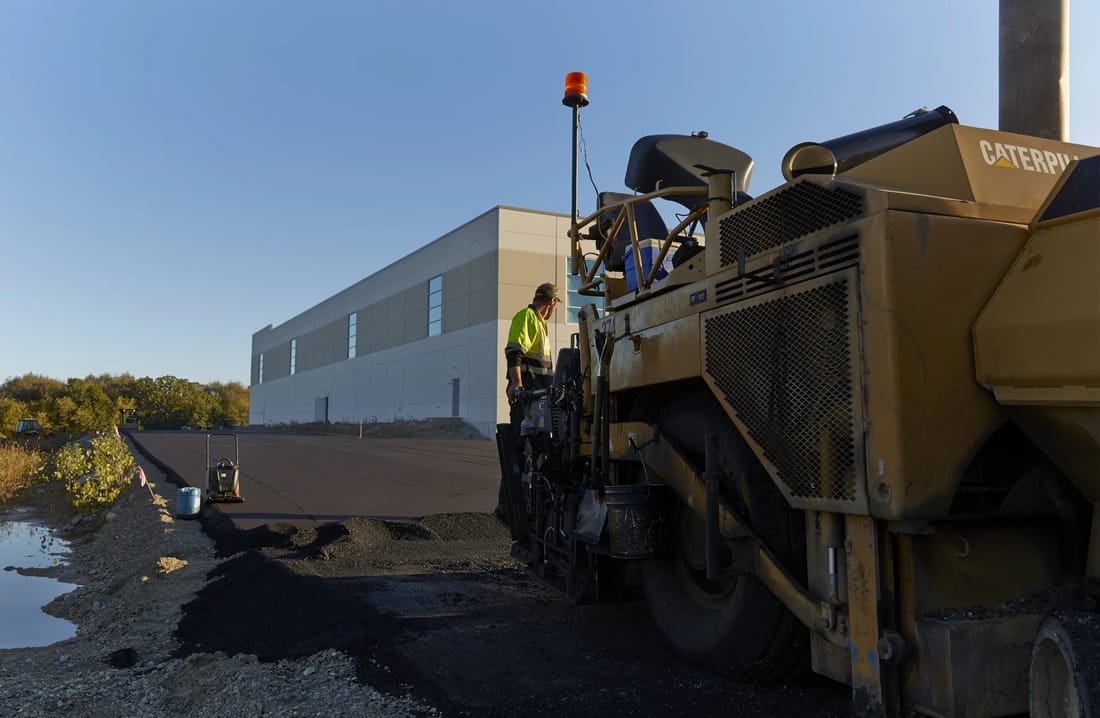
4. Tack coat and asphalt placement: Once the base is set and inspected, we apply a tack coat (an asphalt emulsion that helps bond new asphalt to the base). Then we place hot mix asphalt by paver in one or more lifts. For light duty commercial parking, that might be a 2 to 3 inch surface mat. For heavier traffic like delivery lanes or dumpster pads, we often use 3 to 4 inches, sometimes with a thicker base or an additional binder course.
5. Compaction, striping, and cleanup: Steel drum and pneumatic rollers compact the asphalt before it cools. We check slopes with a level and confirm there are no birdbaths holding water. Once cured enough, we lay out stalls, fire lanes, and ADA accessible spaces with striping that meets Texas Accessibility Standards. We then reinstall wheel stops if needed and clean dirt from adjacent sidewalks and entries.
Design and material choices for Irving commercial properties
Commercial gravel to asphalt conversions allow you to fix layout problems while you upgrade the surface. Precision Asphalt Irving can help you rethink traffic flow, parking counts, and safety before any asphalt is installed.
Layout and traffic design: Many gravel lots in Irving grew over time without a plan. As part of conversion, we often formalize entrances and exits, straighten aisles, and remove unsafe pinch points. For example, for a service business off Story Road we might create a one-way loop so tow trucks can move easily without backing across customer paths. We also look at trash truck routes, fire lane requirements, and accessible parking locations so your lot works in real life, not just on paper.
Asphalt mix choices: Not every mix is the same. For most commercial lots in Irving, we use a dense graded hot mix that handles temperature swings and local loads. High traffic entrances or drive-through lanes may get a slightly stiffer mix that resists shoving where vehicles stop and start repeatedly. In heavy truck or industrial areas, we may recommend a thicker asphalt structure or a specialized mix to handle turning truck axles.
Base and thickness options: Light duty office or retail parking with mostly passenger cars can often use a 4 to 6 inch base with 2 to 3 inches of asphalt. If your site sees frequent 18 wheelers, like near warehouse corridors along SH 161, we typically increase both base and asphalt thickness or add reinforced sections at loading docks and dumpster pads. These decisions are driven by your specific use, not a one size fits all template.
Drainage and edges: Irving clay soils hold water, so edge design matters. Unprotected asphalt edges next to soft dirt can break down as vehicles roll off the side. We can add concrete ribbon curbs, valley gutters, or simply widen the paved area so vehicles stay fully supported. Where water previously soaked into gravel, we design slopes to carry water to drains or to stable outflows so it does not pool against your building or erode landscaped areas.
Permits, codes, and local requirements in Irving, TX
For many commercial gravel to asphalt conversions in Irving, some level of city review is involved, especially if drainage or access to a public street is affected. Precision Asphalt Irving helps you navigate those requirements so your project passes smoothly.
When permits are needed: If you are simply resurfacing a private area with no grade changes and no tie-in to a city street, Irving may not require a full site plan. However, converting a large gravel area to asphalt often triggers review because you are changing how stormwater runs off the site. Projects that alter driveway locations, connect to city curbs, or add significant new paved surface usually need plan approval and sometimes a stormwater management review.
Drainage and detention: Because asphalt is less permeable than gravel, the city can ask for proof that your conversion will not increase runoff to neighbors or public systems. In practice, this may mean adding a surface inlet, using existing underground piping more effectively, or grading shallow swales along edges. For most small to mid sized properties, we coordinate with a local civil engineer when needed to provide a simple drainage plan that satisfies Irving standards without overbuilding.
Fire lane and ADA compliance: Commercial sites in Irving must maintain access for fire trucks and must provide accessible parking and routes. As part of your gravel to asphalt conversion, we confirm required fire lane widths and turning radii and mark them correctly with red striping and stenciling if applicable. For ADA, we set slopes at accessible spaces and routes within allowed limits and coordinate any concrete ramps that are required so you do not fail a future inspection.
HOA, landlord, and lender requirements: If your property is part of a commercial association or has a ground lease, there may be separate design standards for paving color, striping layout, and signage. Lenders sometimes require a pavement report or photos before releasing funds. We provide clear documentation, photos, and simple drawings that you can give to HOAs, landlords, and banks so everyone understands exactly what the conversion work will include.
Costs, timelines, and how Precision Asphalt Irving manages problems
The cost of a commercial gravel to asphalt conversion in Irving depends mostly on three things: base work, asphalt thickness, and site complexity. A relatively flat, well compacted gravel lot that only needs minor grading and a standard asphalt section will be less expensive per square foot than a site with soft soils, poor drainage, and truck traffic that demands thicker pavement.
Base and soil conditions: If your existing gravel sits on firm, well drained soil, we may be able to reuse most of it as part of the base, which keeps costs down. If proof-rolling reveals widespread soft spots, we have to excavate and replace more material. We explain these conditions on site rather than surprising you later. Sometimes we phase work, repairing the worst areas first if budget is tight.
Access and phasing: Irving businesses rarely have the option to close completely. Precision Asphalt Irving plans staging so you can keep operating. For a retail center, we might convert the lot in halves or thirds, keeping one entrance and a portion of parking open at all times. For industrial yards, we coordinate around shipping schedules so truck operations keep moving. Phasing and traffic control add some cost but often make the project workable for businesses that cannot shut down.
Weather and common issues: North Texas heat and sudden storms can disrupt a schedule if not managed well. We monitor forecasts daily and avoid placing asphalt right before a storm or on a base that is still wet. If unexpected underground obstructions appear, like abandoned concrete slabs or buried debris that often show up in older Irving industrial areas, we discuss options immediately and document any changes so you know why adjustments are needed.
What to know before you hire: Ask any contractor bidding your gravel to asphalt conversion how they will verify compaction, handle soft spots, and manage drainage. Ask what asphalt thickness they are including and whether that matches your expected traffic. With Precision Asphalt Irving, you get that information in plain language before you sign. We walk you through a realistic schedule, explain how customer or tenant access will work during construction, and provide a clear plan for long term maintenance so your new asphalt lot holds up for many years.