Home › Commercial Asphalt Resurfacing & Overlays
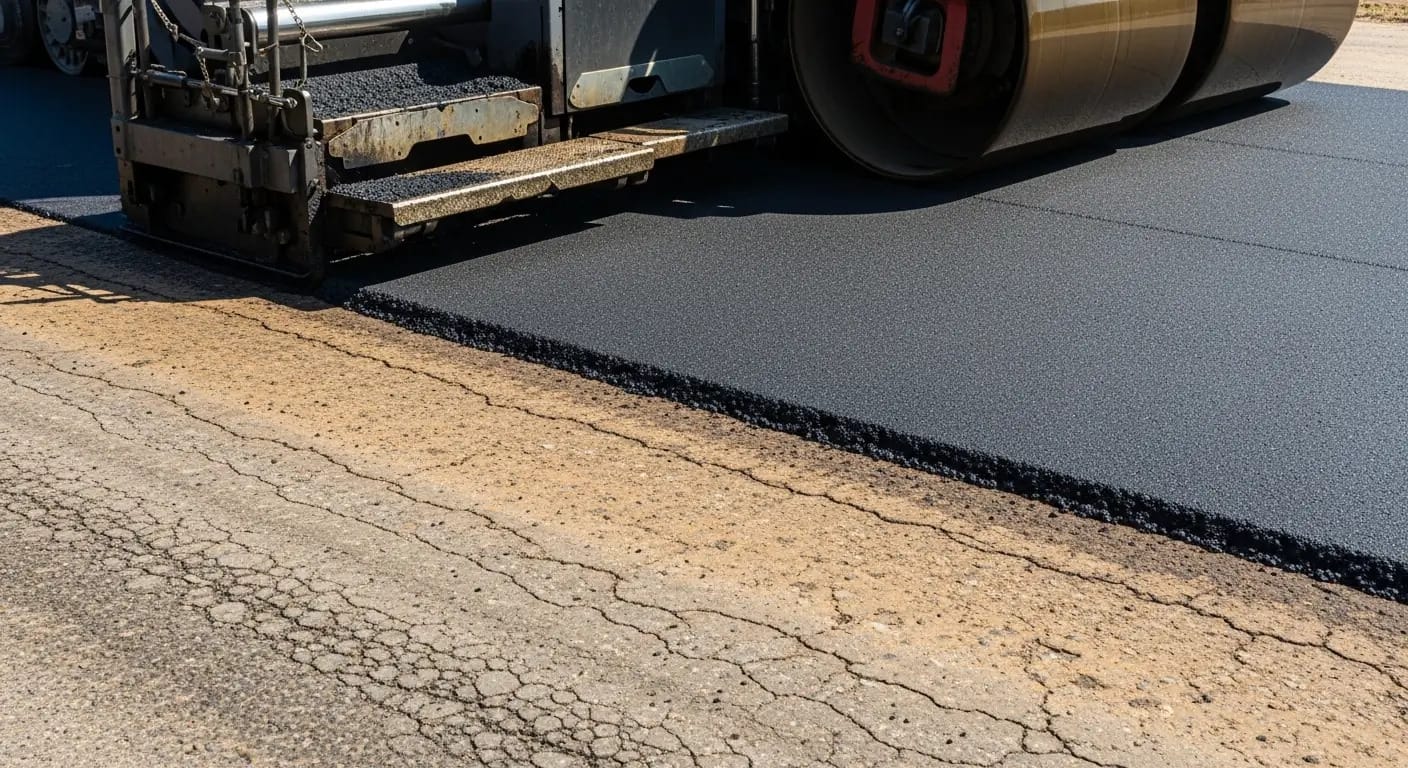
Extend the life of your pavement with commercial asphalt resurfacing in Irving, TX. We repair failed areas, mill transitions, and apply overlays that restore a smooth driving surface. Ideal for aging lots and drives with a solid base, resurfacing offers a cost effective upgrade. Request an on site survey to determine if your property is a good candidate.
Precision Asphalt Irving provides professional commercial asphalt resurfacing throughout Irving, TX, Texas and the surrounding area. Our licensed, insured crew delivers safe, clean, on-time work with a free estimate before anything begins. Call (469) 242-1785 or request your free quote.
Commercial Asphalt Resurfacing for Irving Properties
Commercial asphalt resurfacing keeps busy Irving properties safe, attractive, and functional without the cost of full reconstruction. Precision Asphalt Irving focuses on resurfacing and overlay work for shopping centers, office parks, warehouses, schools, churches, and multifamily communities across Irving and the surrounding Dallas County area.
In practical terms, commercial asphalt resurfacing means installing a new asphalt layer over an existing paved surface that is still structurally sound. It is ideal for lots and drives with widespread cracking, raveling, light rutting, and faded striping, but without deep base failures. For many Irving property managers, this approach extends pavement life 8 to 15 years at a fraction of full replacement cost.
Because Irving has a mix of older 1970s and 1980s commercial centers and newer logistics facilities near DFW Airport, we tailor our resurfacing approach to each site. Older centers often need more patching and leveling prior to overlay, while newer industrial sites usually demand thicker lift designs for truck traffic. Precision Asphalt Irving evaluates this up front so you know exactly what your pavement can handle after resurfacing.
How Our Asphalt Resurfacing & Overlay Process Works
A quality commercial asphalt resurfacing project follows a clear, disciplined process. At Precision Asphalt Irving we start with a detailed pavement inspection and core sampling when needed. We look for base movement, pumping, alligator cracking, drainage issues, and previous patch types. This tells us whether resurfacing is appropriate or if some areas need full-depth repair first.
Next we perform milling or grinding where required. On Irving sites with existing overlays or where asphalt meets concrete drive entrances, we typically cold-mill one to two inches along transitions to keep finished elevations flush with curbs, drains, and door thresholds. This prevents trip hazards and ponding water. We also mill down raised speed humps if they no longer meet your traffic needs, then rebuild them after the overlay to the new profile.
After milling, we complete base repair. Areas with severe alligator cracking or soft spots are saw cut, excavated, and replaced with new base material and hot mix asphalt. This step prevents defects from telegraphing through the new overlay within a season or two. For Irving warehouses that see daily 18-wheeler traffic, we often thicken these repair zones and compact in multiple lifts to prevent rutting.
Once repairs are complete, the existing surface is power swept to remove dust and debris. We then apply a tack coat, a thin asphalt emulsion that bonds the new overlay to the old pavement. An even, well-cured tack layer is critical; skipping or rushing this step is a common cause of delamination and early failure on commercial overlays.
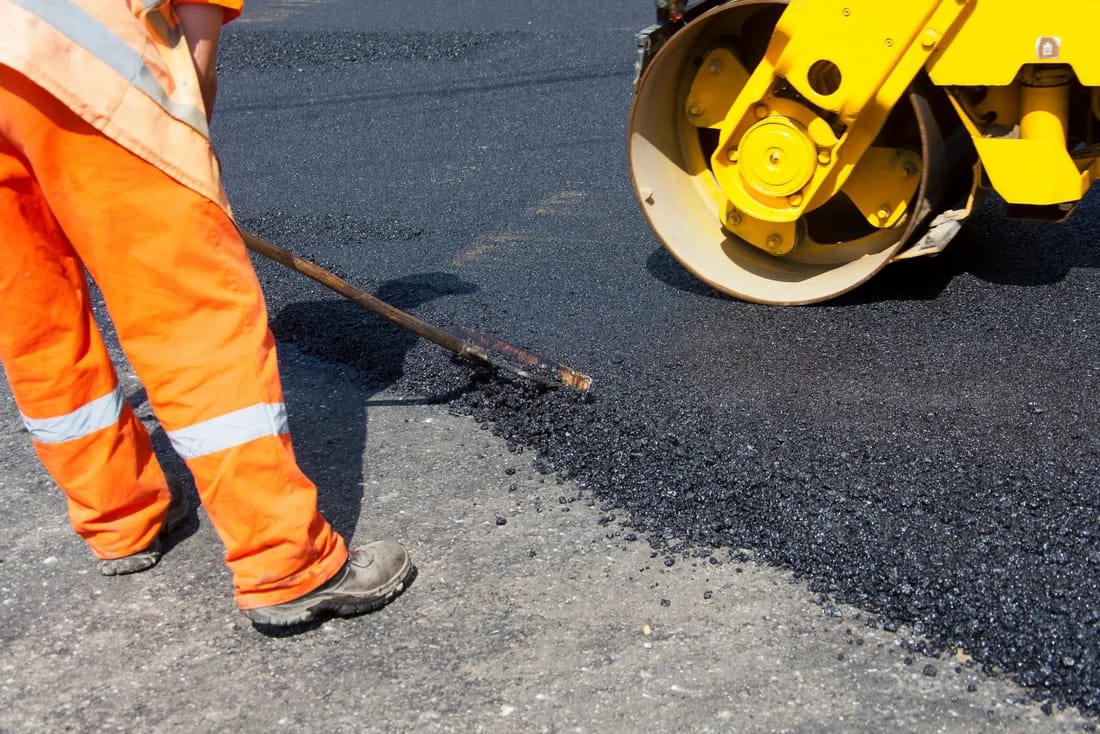
Finally, we install the new asphalt layer, usually 1.5 to 2 inches thick for light commercial use and 2 to 3 inches for heavy truck areas. The mix is placed with a paver for uniform thickness and then compacted using steel drum and pneumatic rollers to achieve proper density. After cooling, we restripe the lot to your new layout, install wheel stops if needed, and re-open the pavement in carefully staged sections to keep your business operating.
Resurfacing Options for Different Irving Commercial Uses
Not every Irving property should receive the same overlay design. Precision Asphalt Irving customizes the overlay thickness, asphalt mix, and layout based on actual use and local site conditions.
Retail centers along Belt Line Road and MacArthur Boulevard typically have high vehicle turnover, lots of short-term parking, and frequent delivery trucks. In these areas we often recommend a standard overlay in most parking bays, plus thicker or reinforced asphalt in loading zones and around dumpster pads where trucks pivot and idle. We also pay close attention to drainage in front of storefronts, because recurring puddles near entrances quickly damage the surface and create slip hazards.
Office parks and medical complexes near Irving Boulevard or Las Colinas usually prioritize appearance and smoothness for visitors. Here we use finer surface mixes that provide a tighter, more attractive finish. We can adjust striping widths, stall angles, and accessible routes to meet current ADA standards while also improving traffic flow for modern vehicle sizes compared to when many of these lots were first built.
Industrial and distribution facilities near DFW Airport, SH 183, and SH 161 require overlays engineered for heavy axle loads and frequent turning trucks. For these sites we may specify higher performance mixes, thicker surface lifts, and sometimes a phased approach that treats truck routes and car parking differently. If heavy container storage occurs on asphalt, we evaluate whether concrete pads or thicker asphalt sections are warranted in those specific zones before proceeding with a standard overlay elsewhere.
Multifamily and HOA properties across Irving benefit from overlays that minimize downtime for residents. We typically divide these projects into several phases, resurfacing one drive or parking section at a time, with clear resident communication and temporary parking plans. This keeps emergency access open and reduces towing conflicts while still letting us maintain quality control on each phase.
What Drives the Cost of Commercial Asphalt Resurfacing
Commercial asphalt resurfacing is often more cost effective than full reconstruction, but several real factors drive the final price. Precision Asphalt Irving explains these up front so you can budget accurately and compare bids on an apples to apples basis.
Overlay thickness is a major cost driver. A 1.5 inch overlay uses significantly less material than a 3 inch overlay, but going too thin on high traffic Irving lots will shorten pavement life. We design for actual use so you are not paying for unnecessary asphalt, but you also are not forced into premature replacement. We will often recommend different thicknesses for parking bays versus drive lanes and loading zones.
The condition of the existing pavement and base also affects cost. If your lot only needs minor crack repair and isolated patching, resurfacing costs stay low. If we find widespread base failures, extensive milling, or poor drainage that needs correction, upfront costs increase but prevent you from investing in an overlay that will fail early. In Irving, older centers built on expansive clay soils often need targeted undercutting and stabilized base patches in wheel paths.
Access and phasing requirements are another factor. If a property must remain fully open 7 days a week, we may need night or weekend work, more traffic control, and smaller working zones. That increases labor and mobilization but may be worthwhile to keep revenue flowing. We can price separate options so you can see the cost difference between a fast, intensive schedule and a more spread-out approach.
Other cost elements include required ADA upgrades, new striping layouts, number of signs and wheel stops, extent of concrete repairs at curbs and sidewalks, and any required Irving or Dallas County permits. We provide line-item proposals that detail these components so you can choose the right scope for your property and compliance needs.
Common Pavement Problems and How Resurfacing Solves Them
Commercial lots in Irving face intense sun, summer heat, and occasional heavy rain, which all accelerate asphalt aging. Precision Asphalt Irving focuses on identifying which problems an overlay will realistically correct and which require deeper repair.
Widespread block cracking, raveling (loose aggregate coming off the surface), and faded, brittle asphalt are prime candidates for resurfacing. A properly designed overlay seals those cracks, restores a smooth surface, and renews the asphalt binder at the top of the structure where weather damage occurs first. This is especially common in older complexes where the surface has been sealcoated several times and is now brittle underneath.
Moderate rutting in wheel paths can often be corrected by milling down the rutted areas, patching, then placing a new lift with proper compaction. However, deep rutting or pumping mud when trucks turn indicates base failure. In those cases we cut out and rebuild the base before resurfacing. Simply overlaying failed base areas is a shortcut that usually leads to reflective cracking within a year or two.
Drainage issues are another frequent problem across flat Irving lots. If water ponds for more than 24 hours after a rain, it shortens pavement life. During resurfacing we can adjust grades slightly with leveling courses, re-establish positive flow to inlets, or correct low spots near dumpsters and loading docks. In some cases, we add small concrete valley gutters or adjust inlets to make the new asphalt work with the existing storm system.
If your lot shows spider web cracking in isolated patches, we may recommend full-depth repairs there and resurfacing everywhere else. This approach targets structural failures while still leveraging the cost benefits of an overlay on the rest of the pavement.
What Irving Owners Should Know Before Choosing Resurfacing
Before you decide on commercial asphalt resurfacing, there are several practical points that Irving property owners and managers should consider. Precision Asphalt Irving reviews these with you so that resurfacing is an informed decision, not a guess.
First, resurfacing assumes the underlying base and most of the existing asphalt are still stable. If your lot has numerous large potholes, severe heaving, or drainage that has never worked properly, full-depth reconstruction in some sections may be the better investment. We can provide a hybrid plan that combines reconstruction in the worst areas with overlay on the rest.
Second, timing matters. Many Irving retail and office properties prefer overlay work during slower business periods or cooler months when asphalt handles better and cure times are shorter. If your property has peak seasons, we can schedule work around those windows and phase the project so primary entrances and accessible routes are always maintained.
Third, resurfacing changes pavement elevation slightly. While usually only an inch or two, this can affect thresholds at roll-up doors, drainage patterns at sidewalk transitions, and clearance at existing speed bumps. We examine these points during planning so we can mill, adjust, or rebuild features to match the new surface correctly.
Finally, choose a contractor that understands local conditions and municipal requirements. Irving and Texas standards for ADA compliance, accessible parking counts, and striping details must be met or you risk future correction costs. Precision Asphalt Irving incorporates these codes into every resurfacing layout so you can pass inspections and serve customers safely.
Why Work With Precision Asphalt Irving for Overlays
Precision Asphalt Irving focuses specifically on commercial-scale resurfacing, overlays, and related pavement repairs, which means our crews are accustomed to working around active businesses, high traffic volumes, and tight schedules. We bring practical experience from shopping centers, warehouses, churches, schools, and apartment communities right here in Irving and greater Dallas.
Our proposals are based on measured quantities, core information when appropriate, and observed traffic use, not just square footage. We explain where an overlay is sufficient and where investing in deeper repairs will save money over the life of the pavement. This prevents the all-too-common scenario where a low bid overlay looks good for a year, then cracks and dips begin to reappear.
Project communication is a key part of our service. For larger properties we provide a written phasing plan, site maps highlighting each stage, and recommended closure times. We coordinate with your tenants or facility managers for notifications, and we maintain accessible routes and fire lanes in compliance with local requirements. Pavement markings and signage are restored quickly so your staff and customers are not left guessing about traffic patterns.
If you manage or own a commercial property in Irving and are considering commercial asphalt resurfacing, Precision Asphalt Irving can inspect your pavement, discuss overlay options, and design a plan that aligns with your budget, traffic demands, and long-term maintenance goals.